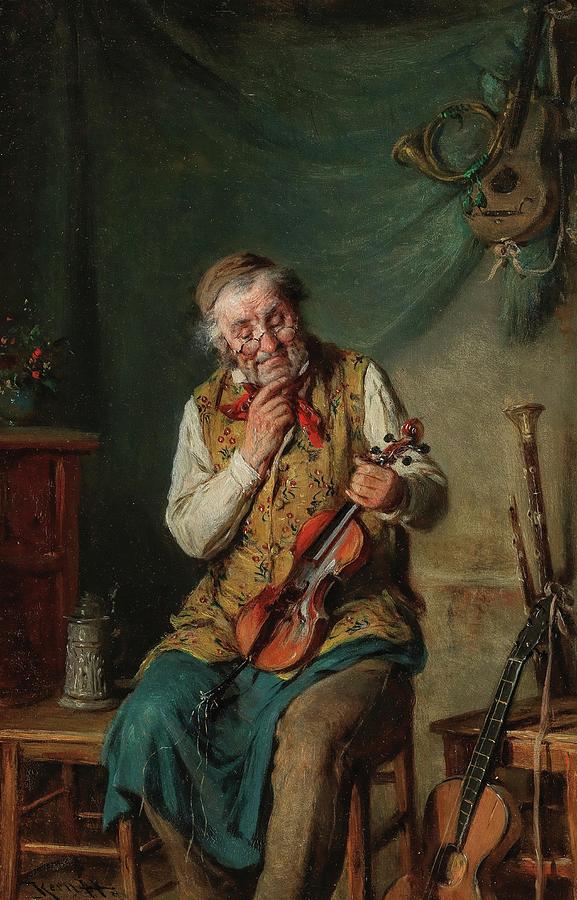
Because one (and science) cannot exactly pinpoint what exactly made violins sound like they sound, numerous theories and explanations surfaced throughout the years.
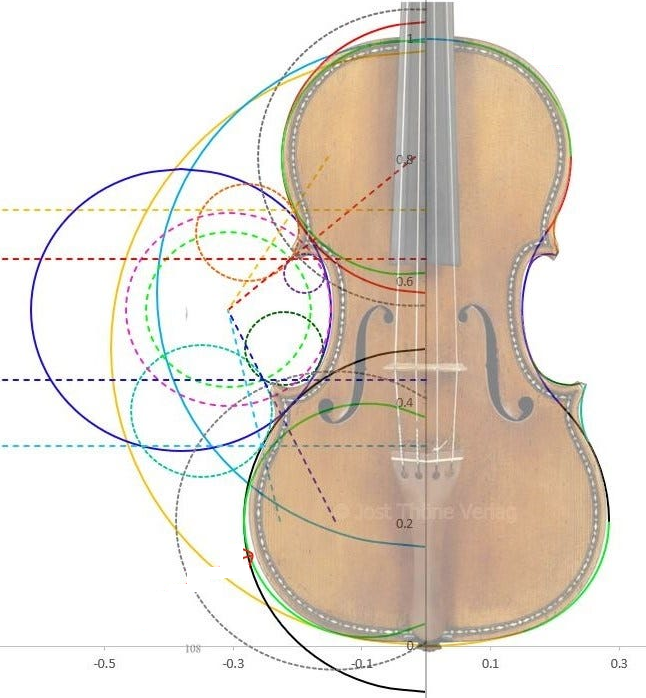
In a sense, they serve to propagate the mystique and the extraordinary narrative surrounding violin making, turning this somewhat simple process into something out of god-like activity.
It is a known fact that Stradivari in particular never documented his process (I believe not even to his sons!), so, only chemical analyses help only a few pieces of the puzzle fit together.
It didn’t contribute the fact that modern CNC (Computer Numerical Control) machines,with perfect symmetry and alignments were unable to replicate the sound of the old masters, only increasing the mystique even further.
What I randomly read in Internet
- They sank the wood in a lake.
- Strad treated the wood with a ‘personal recipe’ to counter the ‘stoma’ – little holes in the wood to let air in so the tree can breathe – to stay open; these would close up as the wood dries.
- Selected wood had enlarged cells caused by the brining (adding salt) process the maker used.
- The varnish used by Stradivari had gem dust sourced from jewelers who gave him leftover scraps out of gem cutting.
- Stradivari treated his woods with a mixture of borax, copper, zinc, alum and lime water. (Source: Keith Randall, Texas A&M University Division of Marketing & Communications).
- Ancient violin makers preferred using French polish, that is better than lacquer because it let the wood breathe, producing a better sound. Heavier finishes dampen the sound.
- Victor Schauberger believed the wood to be “special” because of it’s transport methods via water flume.
- Wood could only be sourced from the singing forest in the Dolomites.
- Stradivari would search for sunken ships and broken boat oars, because the wood was very good and free. Later, as he became richer, the family’s primary wood of choice was Norway Spruce, for the front and back and Maple on the side and Ebony or rosewood on the neck.
- The wood was soaked in highly mineralised water from caves in that region. The wood became highly saturated with different minerals, then properly dried.
- ACS’ Analytical Chemistry report on a nanometer-scale imaging of two of Stradivari’s violins, revealing a protein-based layer between the wood and varnish. Source: link.
- Recipe for making a sealer for violins:
- Casein: milk. Some makers would mix casein, calcium, and water to prepare a potion.
- A “common” recipe (Maestronet link) by Michael Molnar:
- 500 ml distilled water (this avoids dissolved minerals like iron)
- 14 g Potassium Hydroxide (KOH) for a 0.25 M solution
- 45 g acid casein (slowly dissolved)
- 80 g table salt as a preservative.
- Video by Davide Sora on YT
And this list is obviously non-exhaustive. Let’s take a brief break and realise that we are alive and breathing and perhaps we don’t need these confabulations in our lives.
It makes me remember this famous quote:
“What do we really know?”
Samuel Zygmuntowicz, within book “The Violin Maker: A Search for the Secrets of Craftsmanship, Sound, and Stradivari”, by John Marchese (2009).
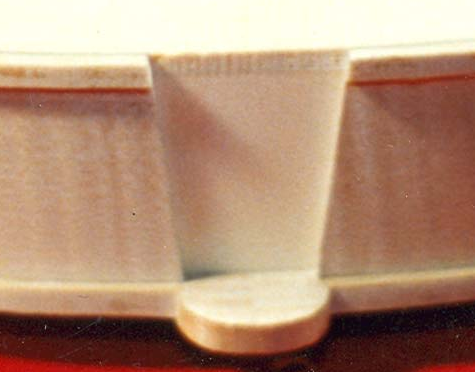
What do we really know? In the above figure, the mortice angles are straight or slightly off? Does it matter to sound?
More unsubstantiated claims altogether:
- Soak wood in linseed oil (Echard et al).
- Use of diamond dust that was rubbed into the wood that had to be dried at sea.
- All in all, perhaps the Stradivari secret is that he was indeed a very good craftsman, after all.
Finally: the secret
What is, actually, the secrets behind old violin’s extraordinary acoustics? Perhaps they were the friends we made along the way.
Mr. Ping: The secret ingredient is… Nothing.
Po: …Huh?
Mr. Ping: You heard me, nothing. There is no secret ingredient!
Po: Wait, wait. It’s just plain old noodle soup? You don’t add some kind of special sauce or something?
Mr. Ping: Don’t have to. To make something special, you just have to believe it’s special.
From Kung Fu Panda (movie)
Epilogue
Let’s agree that lot of the knowledge about this topic is purely anecdotal.
A great portion of the whole experience is highly subjective.
In the end, humans need stories to bring sense to their lives.
We practically demand a “journey’s hero” narrative, such as the one pursued by Antonio Stradivari, a simple woodworker made rich and famous through his highly-sought violin making abilities. From rags to riches, with wood sourced from a magical sounding forest and tweaked with ingredients only known to him.
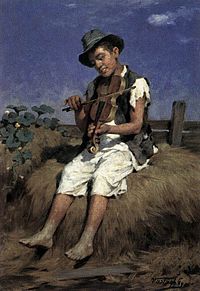
The Creation of the Violin
Imagine if we knew all the secrets and the reproducibility rate was high: old violins would be sold by small amounts of money and a lot of Stradivari-like high-quality violins would saturate the market, rendering all these stories meaningless.
And let’s not kid ourselves, all these stories find parallels with the fashion industry, with the wine industry, even with the cheese industry, chiropractics, astrology, homeopathy, and so on.