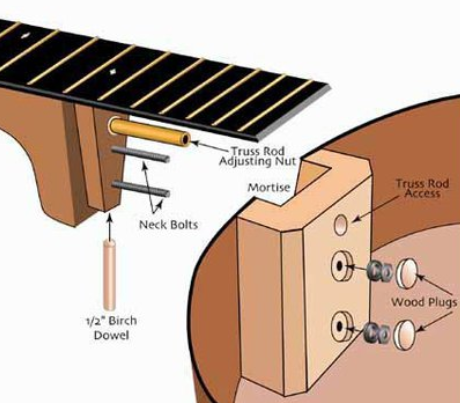
Earlier violin (baroque) designs employed butt joint, where the neck was glued and then a bolt offered the necessary support for holding it in the body.
Well, if you think about it, guitars employ this method as the tension is much stronger.
Let’s go back to violins now.
Changes in design shifted the pressure to the button of the violin, where modern pieces handle it well enough so they won’t break on playing the instrument.
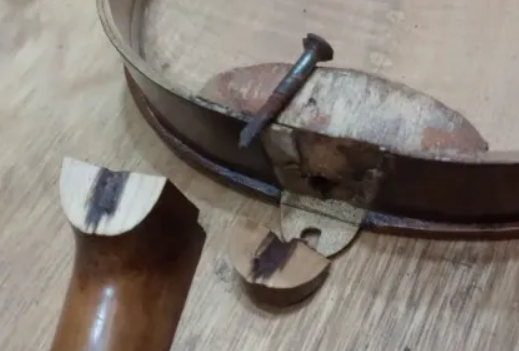
As figure shows, over time, rust or bad installs lead to issues on tearing the instrument apart, requiring maintenance.
Let’s take one step back even: bolts are quite modern; they used nails!
Oh, the horror. 😀
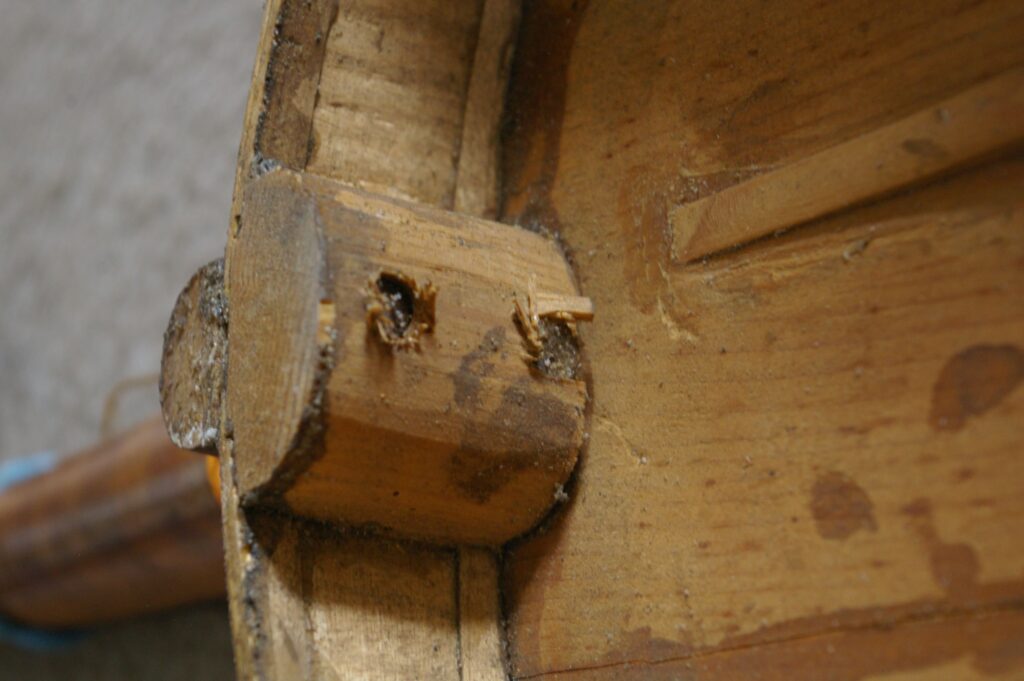
Are nails strong? Well, yes.
In earlier woodworking, they used nails for several situations, from flooring, barrels, doors, clocks, boxes, beds, to coffins. Look this very interesting post about “the secrets of nails”.
A different kind of nail was used, with a different ‘format’ to add pressure to the wood instead of just piercing it (different from what we use nowadays, that is round).
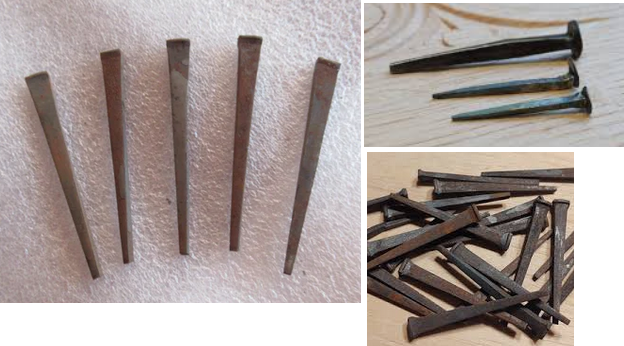
You can buy on Amazon these so called “Common Cut Nails – Antique Style” (10 nails for £24.47, prices of July/2024) – which are by far not cheap, compared to the round “alternative” (although much weaker when joining wood pieces altogether).
Well, I digress.
Let’s go back to Geigenmacher.
Not yet though: look at this job for a Double Bass:
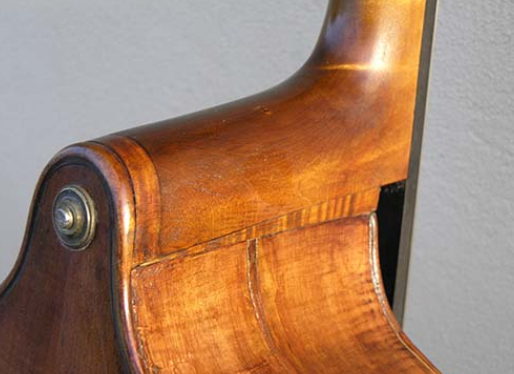
Again: it’s all about tension (in the case of the figure, also about alignment to the top, as an additional wedge was fitted to correct the proper angle). It looks ugly though. I digress again.
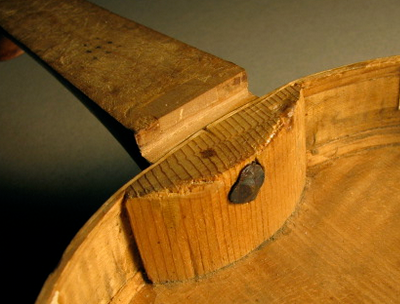
Well, more “aggressive” luthiers might even put a nail on the outside of the button:
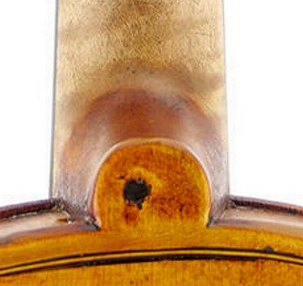
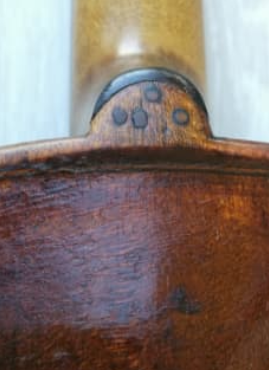
It has been a wild account of adding bolts and nails into the neck.
Nowadays, there’s no need to do it, so please refrain.
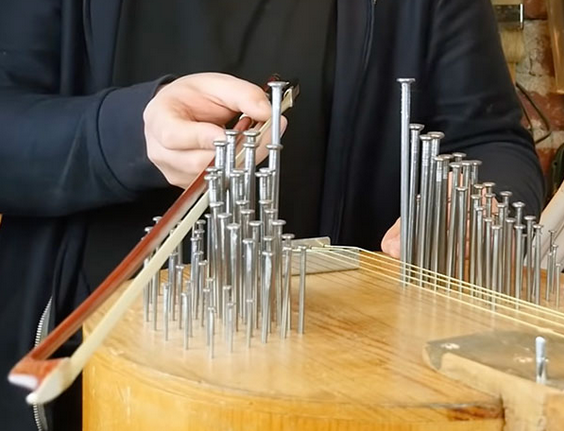
OR, you can make a Nail Violin!